SolutionMall
Partner CRM
Positioning Key Highlights Needs Use Cases Guidelines Integration Differentiators Handling
Language
Home / Sales Training / Data Patch Cables
Sales Training Guide · Internal Use Only

Data Patch Cables
Sales Training Guide

A comprehensive training resource for SolutionMall sales teams, authorized resellers, and channel partners.

Target Audience: SolutionMall sales teams, authorized resellers, and channel partners worldwide.

Product Positioning & Sales Mindset

Understanding the role of data patch cables in overall solutions.

What Are These Products?

Data patch cables are specialized connection cables for network devices, servers, storage systems, industrial control equipment, and various terminals.
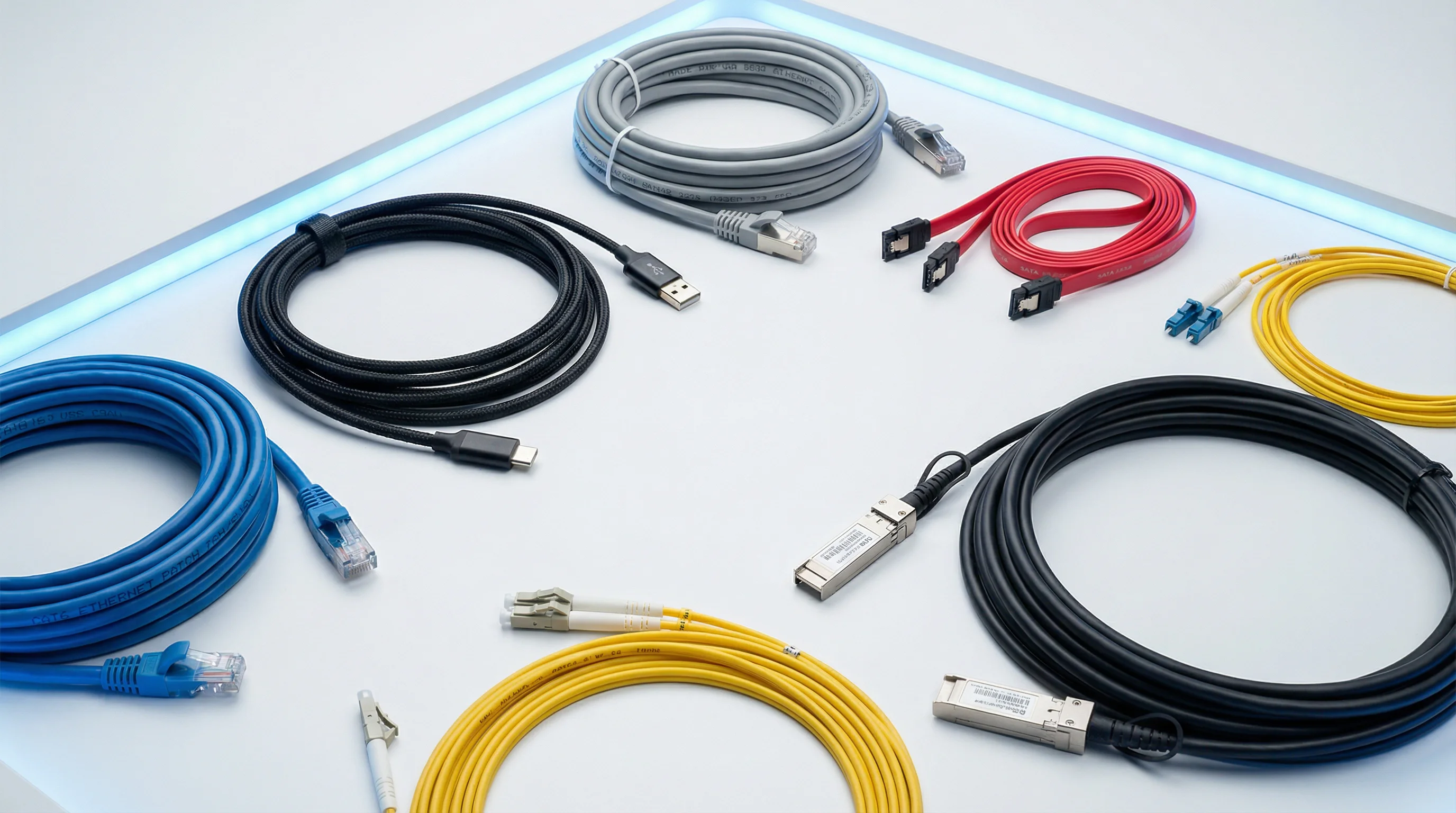
Role in the Overall Solution
  • Connection role: Links devices, modules, and ports
  • Adaptation role: Bridges different interfaces and generations
  • Assurance role: Connection quality affects system stability
  • In critical scenarios, the connector itself is a risk control point
Product positioning
Data patch cables as system connection infrastructure

Key Sales Cognitions to Establish

🧠
Not "do we have cables" but "can the system stay stable"
Guide customers from single-product thinking to system stability thinking
🔌
Not "can it be plugged in" but "can it run reliably long-term"
Emphasize long-term reliability over short-term connectivity
💰
Not just comparing unit price, but looking at total cost of ownership
Help customers shift from single purchase to full lifecycle perspective

Product Composition & Priorities

Understanding product lines and knowing which directions to prioritize.

Priority 1
Network Patch Cables
Most widely understood, broadest application coverage. Ideal for structured cabling, security networks, office networks.
Priority 2
USB Data & Extension Cables
Ideal for problem-solving sales. Common pain points: interface conflict, insufficient distance, unstable recognition.
Priority 3
DAC / SATA / Industrial Interconnects
Higher technical threshold but stronger professional value. Best for data centers, server/storage, industrial control.
Product highlights
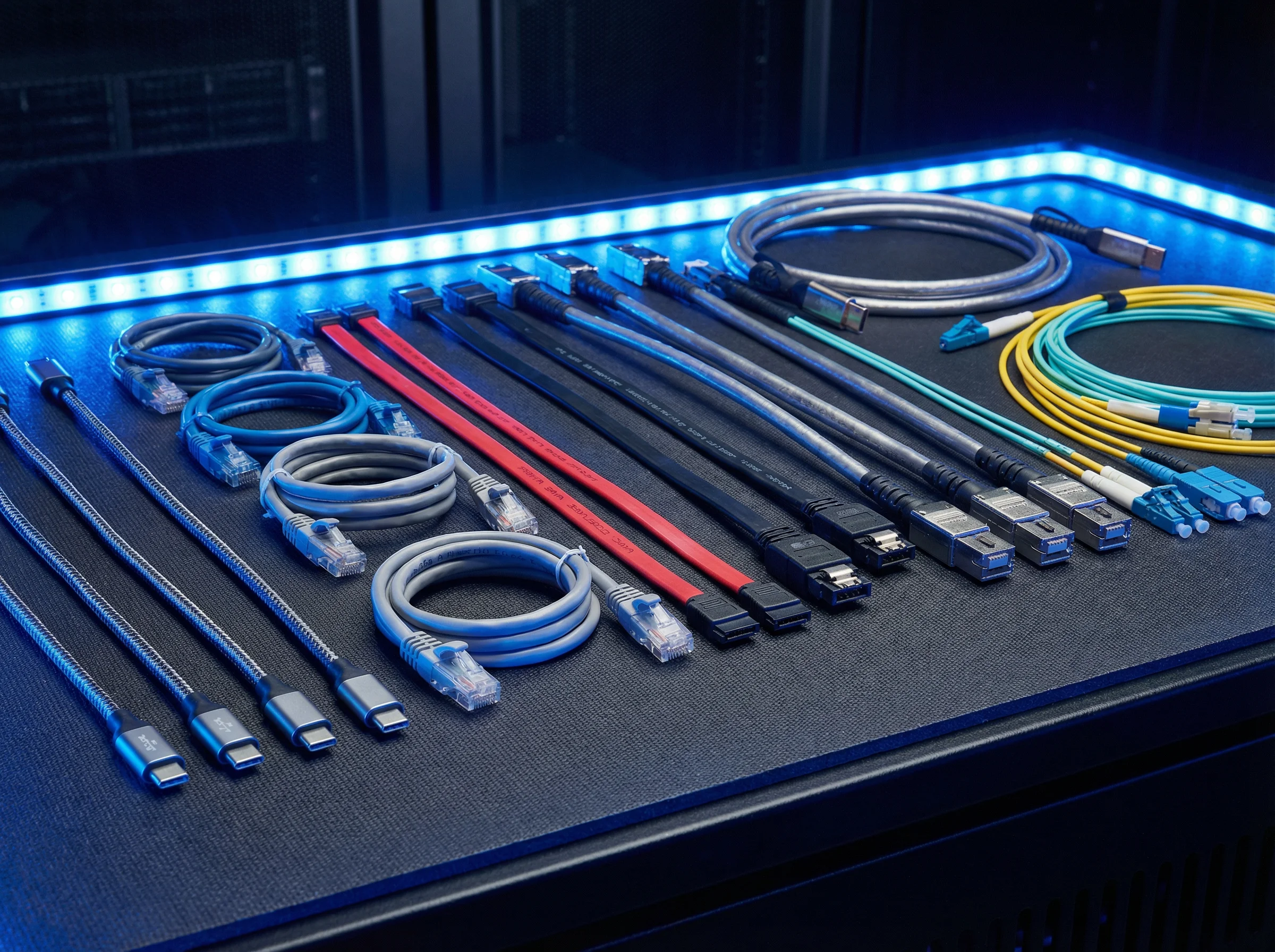
Network patch cables product range
Cable types
DAC and industrial interconnect solutions
Sales Tip: Don't start with parameters. First explain what the product connects, in which scenario it is used, and what problems it solves.

Customer Needs, Target Markets & Our Advantages

Understanding why customers need these products and why they should buy from SolutionMall.

Why Customers Need These Products

🔗
Systems must be connected
Devices must communicate, ports must match, data must be transmitted.
⚠️
On-site deployment cannot afford errors
Many project failures are caused by wrong connectors, mismatched interfaces.
📊
Operation must be stable
Network outages, USB recognition failures, storage connection anomalies are all linked to the connection layer.
🔧
Long-term maintenance must be manageable
Customers increasingly care about unified specifications, spare parts replacement.
Customer needs
Understanding customer requirements

Why Buy from SolutionMall

Professional Design
Interface matching, scenario adaptation, structural rationality
Material & Quality
Conductor, connector, shielding, jacket — all affecting reliability
Long-Cycle Assurance
Consistent replenishment, batch stability, sustainable delivery
Bundle Sales Capability
Switches, patch panels, industrial equipment — sell as complete solution

Typical Scenarios & Sales Expression Focus

Different scenarios require completely different sales approaches.
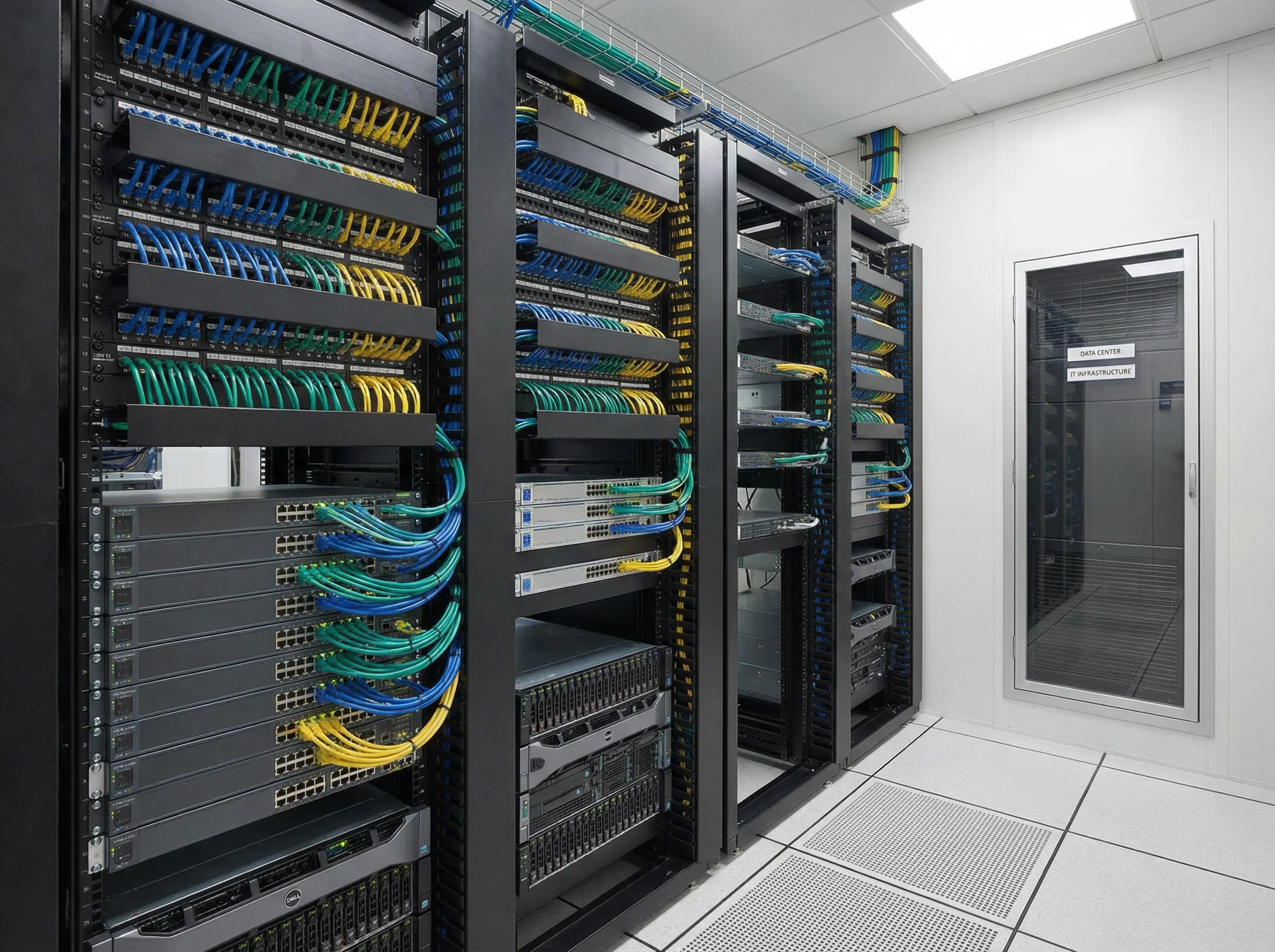
Scenario 1
Office Network / Structured Cabling
Widespread application, high point count, large batches, frequent maintenance.
What Customers Care About
  • Stability and consistent performance
  • Clean cable management
  • Easy future replacement
  • Batch consistency
  • Price-performance ratio
Expression Focus: Talk about "clean, unified, maintainable"
Office network
Office structured cabling deployment
Scenario 2
Cabinet / Data Center Short-Range High-Speed
High bandwidth, compact space, high density, short links but demanding.
What Customers Care About
  • Speed and throughput
  • Compatibility with existing equipment
  • Port density
  • Latency performance
  • Structural cleanliness
Expression Focus: Talk about "high density, high reliability, standardized"
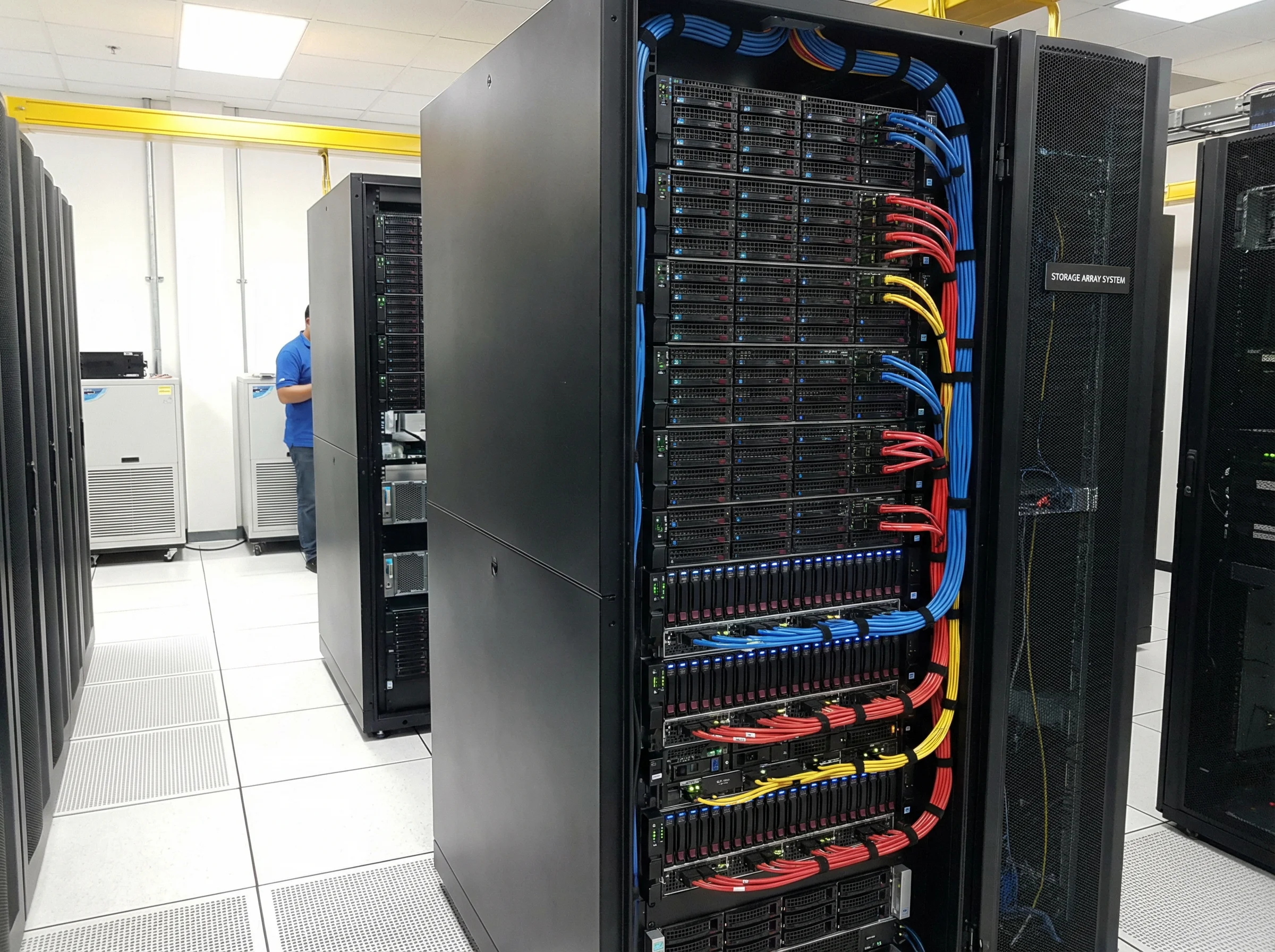
Data center
Data center high-density interconnect
Scenario 3
Industrial Control / Control Cabinet
Compact space, strong interference, vibration, high temperature.
What Customers Care About
  • EMI resistance capability
  • Secure, stable connections
  • Long-term stability
  • On-site adaptability
Expression Focus: Talk about "environmental adaptation" and "long-term stability"
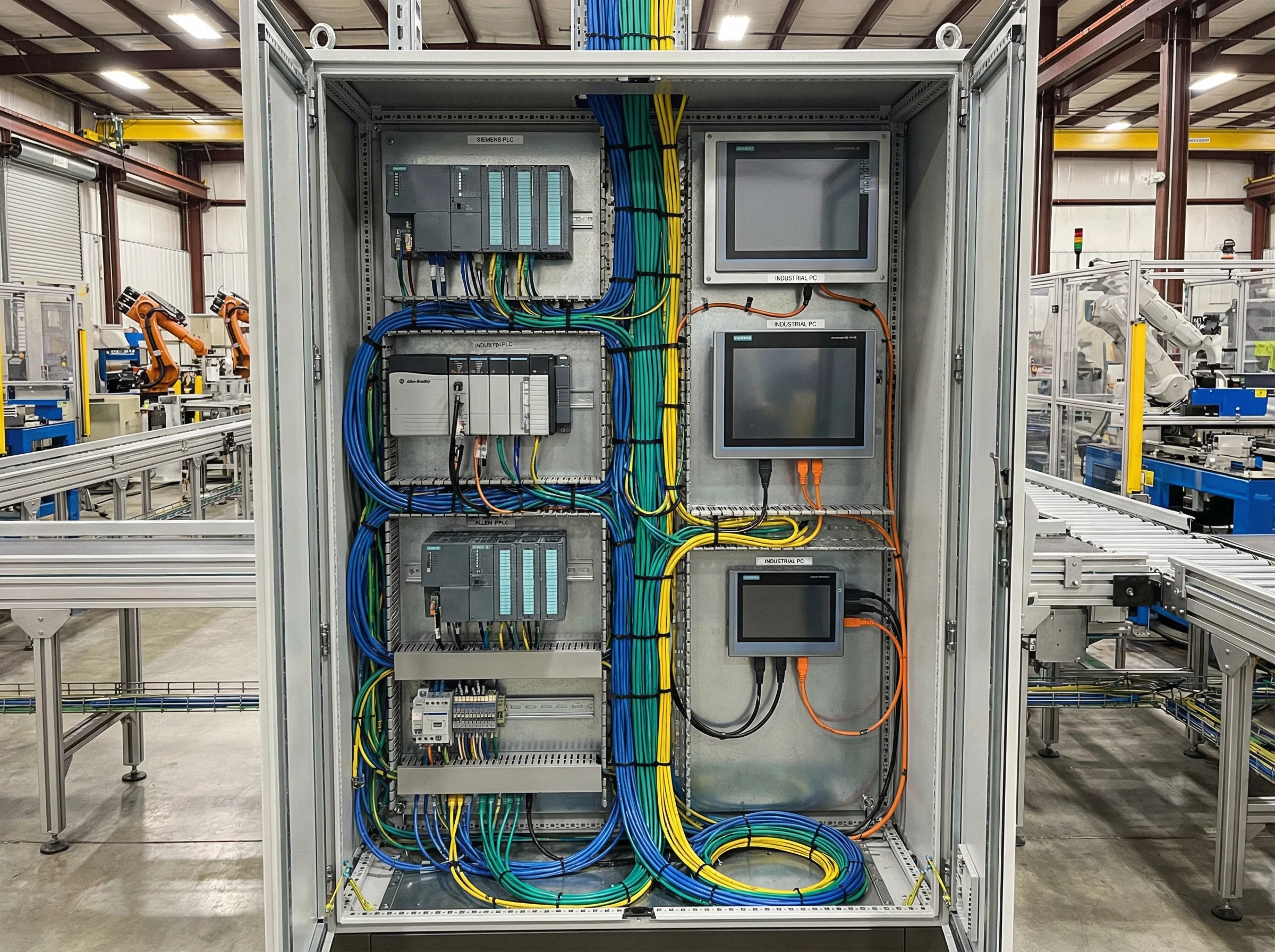
Industrial control
Industrial control cabinet cabling
Scenario 4
Server / Storage Internal Connections
Small space, continuous operation, short maintenance windows.
What Customers Care About
  • Stable device recognition
  • Installation compatibility
  • Rational cable routing
  • Easy future maintenance
Expression Focus: Talk about "reliability" and "internal deployment compatibility"
Server storage
Server and storage internal connections
Scenario 5
USB / Long-Distance Extension / Device Access
Looks simple, but compatibility and recognition issues are very common.
What Customers Care About
  • Whether device is recognized
  • Whether it is stable
  • Whether it supports actual distance
  • Whether interfaces truly match
Expression Focus: Talk about "compatibility" and "stable recognition"
USB extension
USB extension and device access solutions
Scenario 6
Debugging / Maintenance / Legacy Device Upgrade
Complex device generations, old interfaces, incomplete documentation.
What Customers Care About
  • Can it connect at all?
  • Can it debug successfully?
  • Can we avoid trial-and-error?
  • Can service be restored quickly?
Expression Focus: Talk about "less trial-and-error, faster recovery, fewer return trips"
Debug maintenance
Debugging and maintenance connectivity solutions

Sales Principles, Value Baselines & Promotion Boundaries

What to uphold, what to emphasize, and what to avoid in sales conversations.

Sales Principles to Uphold

1
Don't sell it as a simple single item
First assess: connection target, usage scenario, interface relationship, transmission requirements, environmental conditions, and maintenance approach — then recommend.
2
Must discuss application requirements
Same interface, same appearance, doesn't mean suitable for all scenarios. Insist on "application-based judgment."
3
Don't only look at purchase price
True customer costs include: cable pulls, recognition failures, return trips, downtime, repeated purchases, and long-term maintenance chaos.
4
Talk about project closure and delivery results
Don't just say "buy this cable." Say: "Can this connection help the project land more stably?"
5
Professional connection value often exceeds the price gap
Especially in high-reliability, high-density, high-interference, difficult-maintenance scenarios.
Sales guidelines
Professional data connectivity sales approach

Promotion Boundaries

Purely price-driven demand
Don't prioritize purely low-end, purely price-driven demand with no value expression space.
No over-promises before interface and scenario are confirmed
Before clarifying interface and scenario, don't over-promise usability.
Cannot only claim "theoretical support"
For project applications, don't just say "theoretically supports."
Bottom-line judgment criteria
Is there application value? Is there professional expression space? Can it support real results?
Core Message: Not all projects need the highest configuration, but requirements should never be lowered beyond what the real scenario demands.

Bundle Relationships & Linked Sales Opportunities

Data patch cables are most impactful when sold as part of a system.

Outward Linkage
How Patch Cables Drive Other Products
  • Patch panels & cable management trays
  • Modules, transceivers & adapters
  • Network switches & routers
  • Server & storage accessories
  • Industrial control peripherals
Inward Linkage
How Other Products Drive Patch Cable Sales
  • Network switches → need patch cables
  • Servers → need SATA/SAS/USB cables
  • Storage systems → need DAC/SAS cables
  • Industrial equipment → need shielded cables
  • Security systems → need network patch cables

Common Bundle Combinations

Product Line Recommended Bundle
Network Patch CablesPatch panels + Modules + Cable managers
USB Data CablesExtension cables + Adapters + Peripheral access solutions
SATA / SAS CablesStorage devices + Server accessories
DAC CablesSwitch port solutions + Server interconnect
Console / Debug CablesTool kits + Maintenance solutions
Integration
Complete connectivity ecosystem
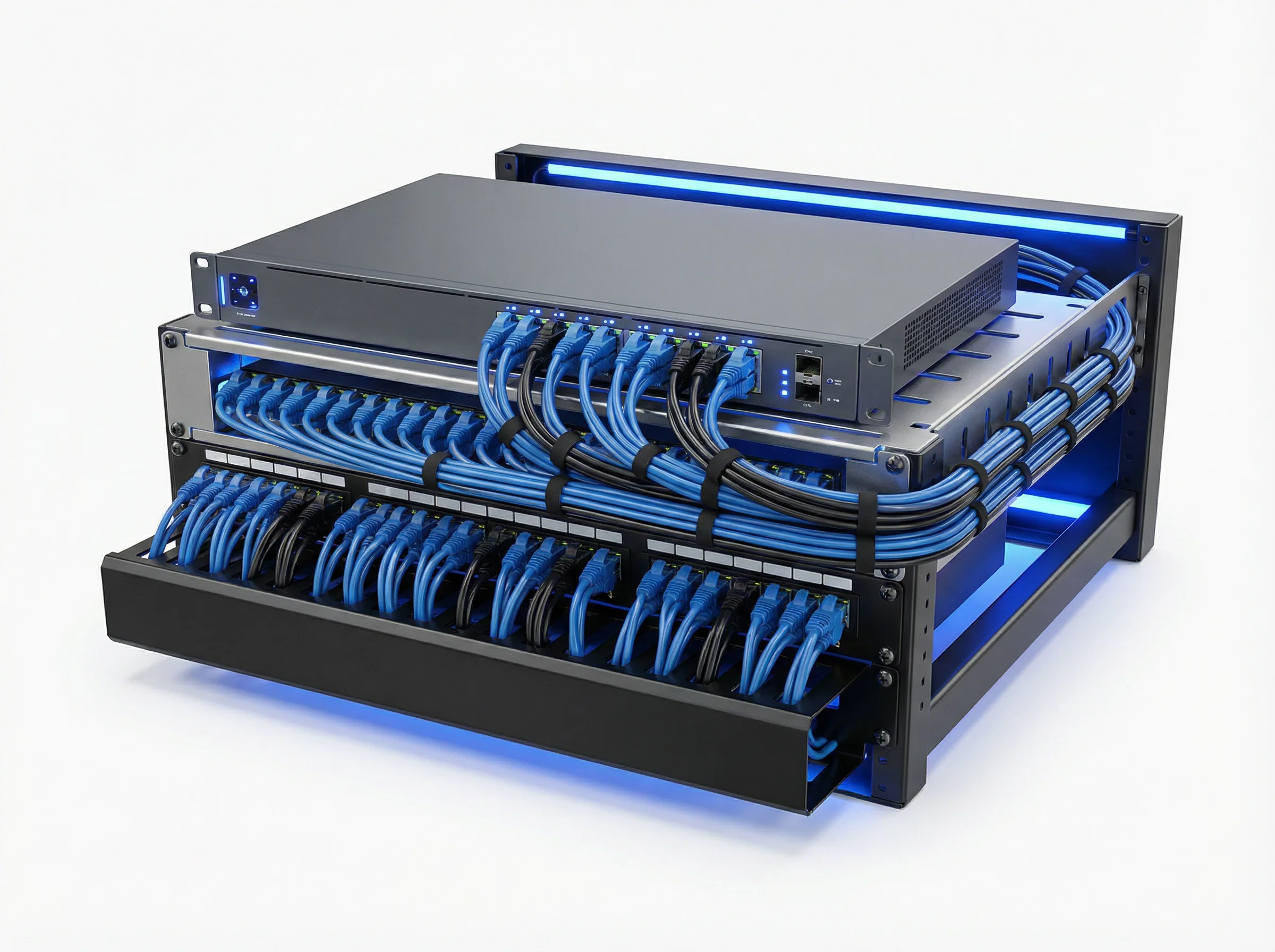
Bundle products
Bundle product recommendations
How it drives other products ▼
When selling patch cables, proactively ask: Is this a replacement or new installation? Are there more batch needs later? Does it involve other interfaces or accessories?
How other products drive it ▼
When customers buy main equipment, proactively mention: "Have the connection cables for this device been confirmed? We can recommend matching connection solutions."
Better way to present integration ▼
Don't just say "you can also buy these." Better: "Are these connection relationships complete? Would considering these products together be more efficient?"

Core Value Propositions & Key Communication Points

Messages worth repeating in every customer conversation.

Core Value Propositions

Data patch cables are not accessories — they are system connection infrastructure
Correct matching means the system can truly run stably
Correct matching is more important than low-price procurement
Connection quality affects delivery results and long-term maintenance
Good connection solutions reduce return trips, cable pulls, and hidden costs
Batch projects need a standardized connection system

Key Messages to Repeat

Not "do we have cables" — but "can the system stay stable"

Not "can it be plugged in" — but "can it run reliably long-term"

Not "buy first, test later" — but "assess first, then deploy"

Not just comparing unit price — but looking at total cost of ownership
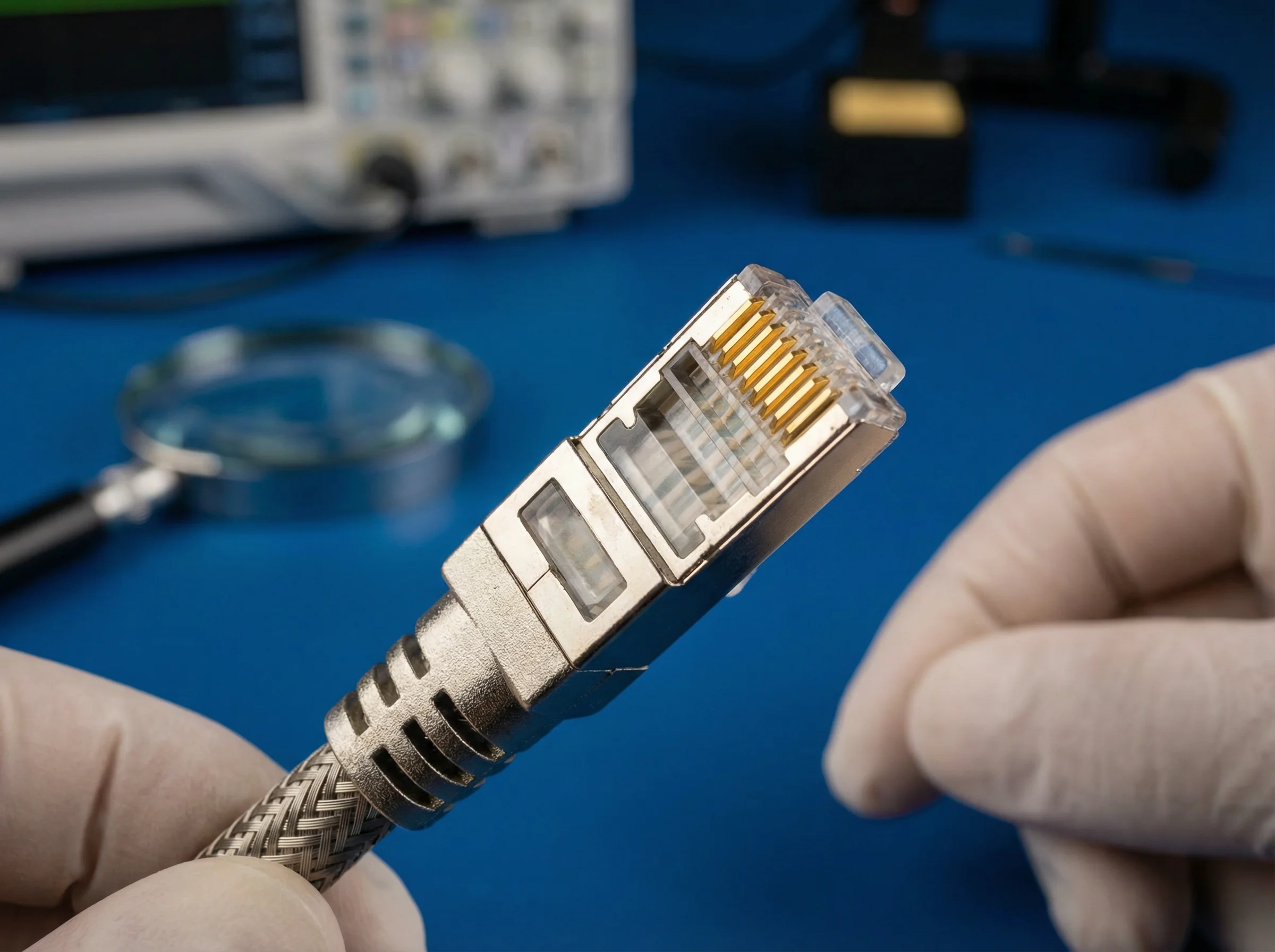
Differentiators
Core value differentiation in action

Brand Slogans

Right Connection.
Right Result.
Connect with Confidence
Professional Matching,
Reliable Delivery
Every Port Matters

Common Customer Objections & Response Strategies

Master these responses to turn objections into opportunities and build customer trust.

💬 The price is too high
▼
Don't fall into a unit price debate. Instead redirect to: application scenario, stability requirements, return trip and downtime costs, long-term maintenance costs.
Core logic: These products cannot be evaluated only by purchase price — consider failure cost and long-term use cost.
💬 I just want something cheap that works
▼
First confirm whether the customer's scenario truly has low requirements. If stability, compatibility, maintenance, and long-term operation matter, remind: "Can plug in" does not equal "can run stably long-term."
The real expense is return trips, downtime, and repeated purchases.
💬 I just want to buy a single item
▼
Respect the customer's purchasing pace, but add: "We're not complicating things — we just hope to help you avoid interface mismatches, wrong lengths, or future replacement hassles."
Logic is not hard selling, but demonstrating professional support.
💬 This type of product doesn't need to be so professional
▼
Guide customers to re-recognize the product's role: "This type of product, while not main equipment, directly affects whether main equipment can work stably."
In critical scenarios, the connector itself is a risk control point.
💬 We already have a supplier
▼
Don't hard-compete on relationships. Enter from complementary value: "We can provide additional support in scenario judgment, interface matching, bundle recommendations, batch unification, and ongoing maintenance."
Even with an existing supplier, customers may lack more professional application advice and bundle capability.
💬 As long as the interface is the same, it should work, right?
▼
This is the most typical misconception. Remind customers: "Same interface appearance doesn't mean same version, power supply, bandwidth, protocol, and compatibility."
Wrong judgment most easily leads to recognition failures and on-site trial-and-error.
💬 Can't anyone sell this type of product?
▼
Guide customers to see the difference is not in "having stock" but in: understanding application scenarios, judging interface relationships, giving reasonable bundle recommendations, supporting project landing and ongoing maintenance.
The difference is not "selling a cable" but "being able to explain the connection problem clearly, judge accurately, match correctly."
Objection handling
Professional objection handling in sales

Need a Customized Solution?

Our technical team can provide tailored infrastructure solution design and selection advice based on your specific scenario and needs.

Browse Products →